Showing posts with label facebook marketing. Show all posts

Friday, 24 July 2026

Instagram vs Facebook vs LinkedIn: Which Is Best for Your Small Business?


Instagram vs Facebook vs LinkedIn: Which Is Best for Your Small Business?


You post on Instagram.

Then you copy the same post to Facebook.

Then you remember LinkedIn exists, so you publish it there too.

After all that effort, you get a few likes, one comment from a friend, and no clear sign that any of it is helping your business.

This is where many small business owners get frustrated. They are told they must “be everywhere,” but nobody explains whether being everywhere is actually useful.

The problem is not that you are failing at social media.

You may simply be spending your time on the wrong platform.


Being Everywhere Can Make You Invisible

Trying to stay active on Instagram, Facebook, and LinkedIn sounds responsible. In reality, it often leads to rushed posts, inconsistent messaging, and eventual burnout.

A restaurant owner takes photos for Instagram but rarely has time to respond to comments. A contractor posts project updates on Facebook without knowing whether local homeowners are seeing them. A clinic publishes promotional graphics on LinkedIn even though potential patients are searching elsewhere.

Everyone is posting. Few are asking why.

That is the painful truth about social media marketing for small businesses: activity can look like progress even when it produces nothing meaningful.

Three weak social accounts are not necessarily better than one strong account.

The best platform is usually the one where your audience already spends time, pays attention, and feels comfortable taking the next step.


Instagram: Best for Businesses People Want to See

Instagram is built around visual discovery.

It works well when customers want to see your products, results, atmosphere, personality, or process before making a decision.

That makes Instagram a natural fit for:

  • Restaurants and cafés
  • Beauty and aesthetic clinics
  • Fitness businesses
  • Clothing and retail stores
  • Home renovation companies
  • Real estate professionals
  • Event businesses
  • Lifestyle and personal brands

People may not open Instagram with the intention of hiring a contractor or booking a treatment. However, the right photo or short video can create interest before they actively start looking.

A restaurant can show how a dish is prepared. A clinic can explain a common concern. A contractor can share the transformation of an outdated kitchen. A retailer can demonstrate how a product looks in real life.

Instagram helps people imagine an experience.

But it also creates pressure. Businesses often feel they need polished videos, constant Stories, trending audio, and daily posts. That is not always true.

A clear, useful post can outperform a flashy one when it answers a real customer question.

Instead of asking, “What should we post today?” ask, “What does a customer need to see before trusting us?”

That question leads to better content creation and a more practical Instagram strategy.


Facebook: Still Useful, Just Different

Facebook is often treated like yesterday’s platform. That is a mistake.

It may not feel as fashionable as Instagram, but it remains useful for many local and service-based businesses—especially when their customers are homeowners, parents, families, or adults making practical purchasing decisions.

Facebook can work well for:

  • Local service businesses
  • Contractors and trades
  • Cleaning companies
  • Restaurants
  • Community-based businesses
  • Family-focused services
  • Home improvement companies
  • Local events and organizations

Its strength is not just posting on a business page. Facebook Groups, community recommendations, local discussions, reviews, and paid social advertising can all influence buying decisions.

Consider how people actually behave.

Someone in a local community group asks, “Does anyone know a reliable plumber?”

Within an hour, several names appear. Other people support those recommendations. The customer checks the suggested business pages, reads reviews, and looks for recent activity.

That is Facebook working quietly in the background.

The platform is especially valuable when trust and local reputation matter more than visual appeal. For businesses serving Toronto, the GTA, or a specific neighbourhood, local relevance can be more useful than reaching thousands of people who live nowhere nearby.

The common mistake is treating Facebook like a billboard.

Posting promotion after promotion gives people little reason to follow or remember the business. Helpful advice, local updates, customer questions, project examples, and community-focused content usually feel more natural.


LinkedIn: Best When Business Relationships Drive Sales

LinkedIn is not the right place for every small business.

That needs to be said clearly.

A local café probably does not need to spend most of its content budget building a LinkedIn presence. A business consultant, commercial contractor, recruiter, accountant, software provider, or professional service firm may see a completely different result.

LinkedIn is most useful when your customers are:

  • Business owners
  • Managers
  • Decision-makers
  • Professionals
  • Corporate buyers
  • Referral partners
  • Commercial clients

The platform is less about showing a product and more about demonstrating how you think.

A useful LinkedIn post might explain a mistake business repeatedly make, share a lesson from a recent project, challenge a common assumption, or offer a practical view of an industry problem.

People on LinkedIn are often evaluating credibility.

They are asking:

Does this person understand my problem?

Do they have relevant experience?

Would I trust them with an important decision?

That is why generic promotional posts perform poorly. “We offer excellent service” tells the reader almost nothing. A thoughtful observation about a real business problem can say much more.

LinkedIn marketing works best when expertise is made understandable—not when a company tries to sound impressive.


The Platform Is Not the Strategy

Business owners often blame the platform when the real problem is the message.

Instagram does not automatically make a business visually interesting. Facebook does not automatically create local trust. LinkedIn does not automatically generate professional leads.

The content still needs a reason to exist.

If every post says “Buy now,” “Book today,” or “Contact us,” people begin to ignore it. They do not open social media hoping to see more advertising.

They respond to content that helps them make a decision, understand a problem, avoid a mistake, or see something differently.

A strong social media strategy connects three things:

  1. Where the audience spends time
  2. What the audience cares about
  3. What action the business wants them to take

If one of those pieces is missing, posting more often usually does not solve the problem.


You Do Not Need Three Separate Content Machines

Choosing one main platform does not mean deleting the others.

It means deciding where your best effort should go.

A clinic may focus on Instagram while keeping its Facebook page updated. A commercial contractor may publish detailed insights on LinkedIn and use Facebook for local visibility. A restaurant may make Instagram its main channel while using Facebook for announcements, reviews, and community engagement.

You can also adapt one idea instead of creating everything from scratch.

For example, a contractor could turn one completed project into:

  • A visual before-and-after post for Instagram
  • A local project story for Facebook
  • A lesson about planning or budgeting for LinkedIn

The core idea stays the same. The presentation changes because people use each platform differently.

That is far more sustainable than copying the exact same caption everywhere and hoping one version works.

The short answer: Instagram is usually strongest for visual and experience-driven businesses. Facebook is often more useful for local trust, community recommendations, and family-focused services. LinkedIn is generally the better choice when professional relationships, referrals, and B2B decision-makers drive sales.


How to Choose Without Guessing

Start by looking at your last ten customers.

How did they first hear about you?

What questions did they ask before buying?

Did they need to see examples, read recommendations, or understand your expertise?

Then consider the decision itself.

If the purchase is visual or experience-driven, Instagram may deserve priority.

If the business depends on community trust and local recommendations, Facebook may be stronger.

If the sale involves professional credibility, partnerships, or business decision-makers, LinkedIn may be the better fit.

Do not choose a platform because everyone is talking about it. Choose it because it matches how your customers think and buy.


Focus Creates Better Results

Small businesses rarely struggle because they are not posting enough.

They struggle because their attention is divided.

They are creating content for three different platforms, serving customers, managing employees, answering calls, reviewing expenses, and trying to understand why engagement keeps falling.

The answer is not always “do more.”

Sometimes the smartest move is to reduce the noise.

Choose the platform that best supports your audience and business goals. Learn what people respond to. Create content that answers real questions. Review the results. Then expand only when there is a clear reason.

Your business does not need to win every social media platform.

It needs to be useful, visible, and trusted in the places that matter.

If you are unsure which platform deserves your attention, a focused social media strategy can help you identify where your audience is most active and what kind of content supports your business goals. Explore practical social media marketing solutions from Unlimited Exposure Online.


Monday, 23 September 2024

Facebook Marketing: A Comprehensive Guide for Beginners


Facebook Marketing: A Comprehensive Guide for Beginners


If you're a business owner or marketer aiming to broaden your reach, you've likely heard that Facebook is a treasure trove for connecting with potential customers. But where do you begin? Navigating Facebook marketing can feel daunting, especially with constant algorithm shifts and a diverse audience to cater to. Don’t worry—we’ve all faced this challenge. This guide is designed to help you master Facebook marketing, addressing common hurdles while offering practical strategies specifically for Toronto businesses.


  1. Getting to Grips with Facebook Marketing


1.1 What Exactly is Facebook Marketing and How Does It Work?


So, what is Facebook marketing? In simple terms, it’s the process of promoting your business and engaging with customers on Facebook. This involves setting up a business page, posting engaging content, and running targeted ads to connect with your ideal audience. For Toronto businesses, understanding how Facebook marketing functions is essential for successfully tapping into the local market.


1.2 Why Facebook Marketing is Crucial for Local Businesses


If you’re operating in Toronto, you’re in a vibrant city with a diverse population. With millions of active Facebook users in the region, the platform presents an unmatched opportunity to engage with local customers. As of 2023, around 10.75 million active Facebook users were in Ontario, with the majority based in the GTA. This makes Ontario the province with the highest number of Facebook users in Canada.


The advantages of Facebook marketing for local Toronto businesses include heightened brand visibility, improved customer interaction, and, ultimately, increased sales. Plus, it offers a cost-effective way to compete with larger companies without stretching your budget too thin.


  1. Common Challenges Beginners Encounter in Facebook Marketing


2.1 Keeping Up with Facebook's Algorithm Updates


One of the most significant challenges is staying on top of how Facebook’s algorithm changes affect marketing strategies in 2023. The platform frequently tweaks the way content is shown to users, which can impact the visibility of your posts. Understanding these updates is crucial to ensure your content reaches your target audience effectively.


2.2 Reaching the Right Audience in a Diverse Market


Toronto’s multicultural environment means your audience is highly diverse. Successful audience targeting on Facebook for Toronto marketers involves segmenting your audience by demographics, interests, and behaviors. This helps ensure your message resonates with the right people. It's worth noting that Facebook's popularity among U.S. teens has dropped significantly, with only 32% using the platform in 2022, compared to 71% between 2014 and 2015.


2.3 Budget Limitations for Small Businesses


We understand—marketing budgets can be tight, particularly for small businesses. Finding affordable Facebook marketing options is vital for Toronto-based small companies. The upside? Even with a modest budget, you can achieve meaningful results by targeting smartly and making the most of your ad spend.


3. Step-by-Step Guide to Getting Started with Facebook Marketing


3.1 Creating Your Facebook Business Page


Ready to jump in? The first step is to create a Facebook Business Page for your Toronto business. Here’s how to do it:


Log into your personal Facebook account.

Click on "Pages" and select "Create New Page."

Enter your business name, category, and a short description.

Upload a profile picture and cover photo—ideally your logo and a high-quality image that represents your business.

Add your contact information, location, and business hours to complete the setup.


3.2 Exploring Different Facebook Ad Formats


Facebook provides a range of ad formats, including image ads, video ads, carousel ads, and more. For beginners, it’s helpful to start with image ads for their simplicity, and as you gain confidence, you can experiment with video or carousel ads to see what resonates best with your audience.


3.3 Launching Your First Ad Campaign


Launching your first ad campaign might feel intimidating, but it's more manageable than it seems. Here’s a step-by-step guide to creating your first successful Facebook ad campaign in Toronto:


Open Facebook Ads Manager and click "Create."

Select your marketing objective (e.g., brand awareness, traffic, conversions).

Define your target audience—use location filters to focus on the Toronto area.

Set your budget and campaign schedule.

Pick your ad format and upload the necessary creative assets.

Review your campaign settings, then publish your ad.


3.4 Effectively Targeting Your Audience


Utilizing Facebook Audience Insights for the local market helps you gain a deeper understanding of your potential customers. You can filter audiences by age, gender, location, interests, and behaviors. This ensures your ads reach the people most likely to be interested in your products or services.


3.5 Budgeting and Bidding Strategies


For beginners, cost-effective bidding strategies on Facebook involve setting a daily or lifetime budget that fits your comfort zone. You can start small—Facebook lets you run ads for as little as $1 a day. Monitor how your ads perform and adjust your budget as you see results.


4. Best Practices for Successful Facebook Marketing


4.1 Crafting Engaging Content


Content is key! To create engaging Facebook content for Toronto audiences, post material that resonates locally. This might include sharing community events, local news, or highlighting customer stories.


4.2 Using Facebook Insights and Analytics


Leveraging Facebook Insights is essential for growing your Toronto business. These analytics provide valuable details about how your audience interacts with your content. Pay attention to which posts perform best, and adjust your approach accordingly.


4.3 Scheduling Posts for Peak Engagement


Timing matters. The best times to post on Facebook for Toronto businesses in 2023 are typically around lunchtime (12 pm–1 pm) and early evenings (6 pm–9 pm) when users are most active. Posting during these peak hours can boost your visibility and engagement.


4.4 Engaging with Facebook Groups and Communities


Joining local Facebook groups is a great way to connect with potential customers. Toronto businesses can benefit from Facebook Groups by networking, sharing expertise, and promoting events or special offers within a community-focused space.


Additional Resources

Looking to deepen your knowledge? Here are some top Facebook marketing resources for beginners: 


5. Advanced Strategies for Scaling Your Facebook Marketing


5.1 Retargeting Techniques


Retargeting is a highly effective strategy. Facebook retargeting involves displaying ads to users who have already visited your website or engaged with your Facebook page. This keeps your business in their minds and can significantly increase conversions.


5.2 A/B Testing Your Ads


To optimize ad performance, it's essential to understand how to conduct A/B testing on Facebook ads for improved results. This involves creating two versions of an ad with slight differences to determine which one performs better. You can test various elements like headlines, images, and calls-to-action.


5.3 Partnering with Influencers


Collaborating with influencers can expand your reach significantly. Partnering with local Toronto influencers on Facebook allows you to connect with established audiences who trust their recommendations. Choose influencers whose followers closely match your target market for maximum impact.


6. Success Stories: Toronto Businesses Thriving with Facebook


6.1 Case Study: Local Cafe Increases Sales Through Facebook Ads


Introducing "Toronto Brews," a local cafe that achieved a 50% sales boost after running targeted Facebook ads. By focusing on coffee enthusiasts within a 5 km radius, this Toronto cafe demonstrates the effectiveness of precise targeting in increasing sales through Facebook marketing.


6.2 Case Study: Boutique Retailer Grows Customer Base


"Fashion Forward," a boutique retailer, utilized Facebook ads to expand its audience. This case of a Toronto retailer using Facebook ads to grow shows that with engaging content and well-placed ads, even smaller retailers can compete with larger brands.


Frequently Asked Questions (FAQs)


How do I get started with Facebook marketing for my business?


To begin with Facebook marketing, create a Facebook Business Page by logging into your personal account and selecting "Create New Page." Add your business details, images, and start sharing content. Familiarize yourself with Facebook Ads Manager to run targeted ads. Start by defining your goals, understanding your audience, and setting a manageable budget for testing strategies.


How much does Facebook advertising cost?


Facebook ad costs depend on factors like target audience, industry, and campaign objectives. You can start with as little as $1 per day. Facebook uses a bidding system, so your cost depends on the competition for your audience. It's wise to start small, monitor performance, and adjust your budget for cost-effective results.


How can I target my ads effectively on Facebook?


Effective targeting involves using Facebook’s detailed audience filters. You can target users by location (e.g., Toronto), age, gender, interests, and behaviors. Facebook Audience Insights can help you understand your potential customers better. Creating custom audiences, such as website visitors or email subscribers, also enhances targeting precision.


What’s the best time to post on Facebook for engagement?


The best times to post on Facebook typically align with peak user activity. For Toronto businesses in 2023, these are usually around lunchtime (12 pm–1 pm) and early evening (6 pm–9 pm). However, it’s important to analyze your audience’s behavior using Facebook Insights, as optimal times can vary based on your followers.


How can I measure the success of my Facebook marketing?


Track success by monitoring key performance indicators (KPIs) like engagement rates, click-through rates, conversions, and return on ad spend (ROAS). Use Facebook Insights for organic posts and Facebook Ads Manager for paid campaigns to access analytics. Regularly review these metrics to refine your strategies for improved results.


What types of content perform best on Facebook?


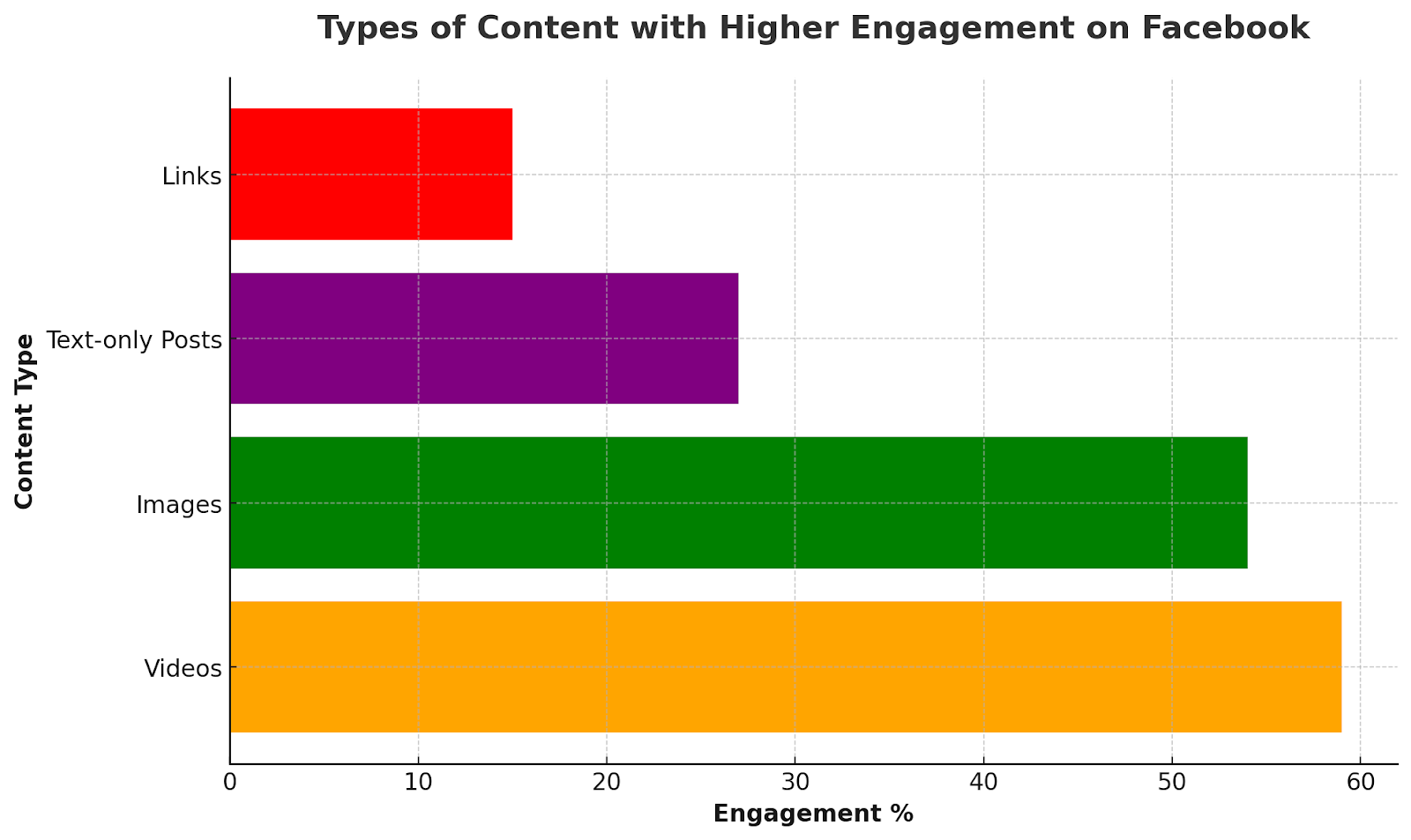
Visual content, such as images and videos, tends to perform best on Facebook, capturing attention quickly. Content that is engaging, valuable, and relevant—like how-to guides, behind-the-scenes posts, and customer testimonials—also works well. For Toronto audiences, locally focused content that reflects community interests can boost engagement and shareability.


7. How do Facebook’s algorithms impact my business posts?


Facebook’s algorithms decide which posts appear in users’ feeds by assessing relevance and the likelihood of engagement. Changes to the algorithm can influence the organic reach of your posts. To navigate this, focus on producing high-quality, engaging content that prompts interaction. Additionally, using Facebook Ads can help extend your reach, ensuring your content is seen by a broader audience despite any algorithm updates.


Conclusion


Taking the First Step Toward Facebook Marketing Success

Starting your Facebook marketing journey may seem daunting, but with the right strategies, the potential for growth is vast. Key points to remember:


Know your audience well.

Create content that is both engaging and relevant.

Begin with a budget that feels comfortable, then scale up as you see results.

Leverage Facebook’s tools and analytics to continually improve your strategy.

Now, go ahead—apply these tactics and watch your Toronto business thrive through effective Facebook marketing!

UE offers an extensive range of resources to enhance your knowledge of digital marketing and its significant impact on our everyday lives. Perfect for both beginners and experienced marketers, our carefully curated materials aim to deepen your understanding and keep you informed about the evolving trends and tactics in digital marketing.

We feature a variety of content specifically designed to help newcomers establish a robust foundation and support experts in sustaining their expertise in the industry. Dive into our diverse offerings and broaden your insights into the dynamic realm of digital marketing.

Bio: Unlimited Exposure Online is a video marketing firm in Toronto


Wednesday, 1 May 2024

Facebook: Is King Video Still Wearing the Crown?


Facebook: Is King Video Still Wearing the Crown?


Hello there, video buffs and social media savants! Today, let's delve into the dynamic world of video content. As many of you might already know, video is the reigning monarch of the content landscape. However, the question on everyone's mind is: How does Facebook stack up against its competitors? Is it still the premier destination for video, or have new challengers ascended to the throne? Gear up because we'll explore watch time, demographic trends, and some compelling social media intrigue!

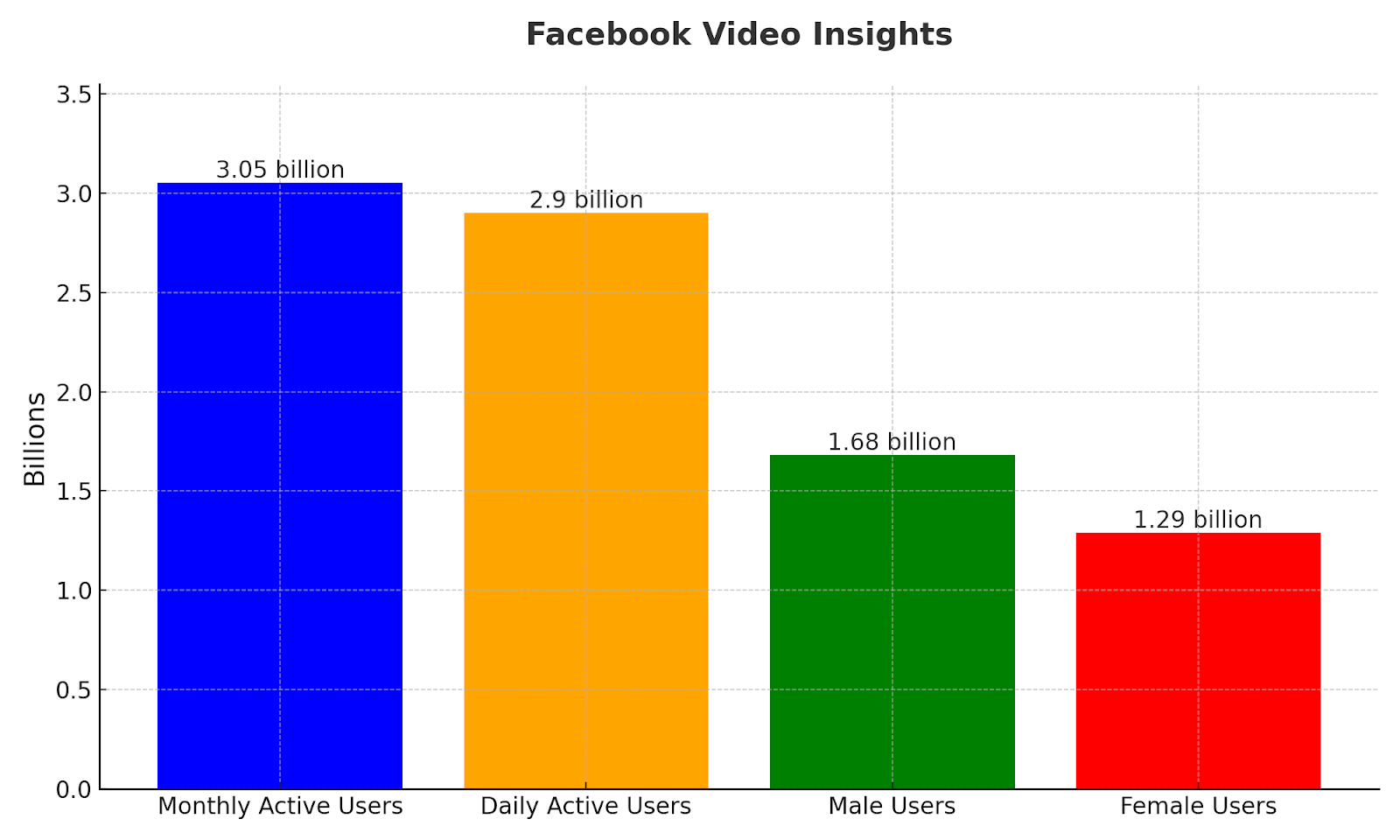
First, we must recognize Facebook's formidable presence. With an impressive 2.11 billion daily active users, Facebook commands a gigantic audience voracious for videos. This gives any video posted on Facebook a potential viewership larger than many of its nascent rivals. Imagine a cinema as vast as a small country—that's the scale we're talking about!


facebook video insights


Yet, size isn't the be-all and end-all. The demographics of video viewers also play a crucial role. Research indicates that Facebook's user base skews slightly older, primarily within the 25-44 age bracket. While this may not seem like a setback, it contrasts sharply with platforms like TikTok, which are burgeoning with Gen Z enthusiasts.

age groups engaging with video content on facebook


Let's shift focus to watch time. Facebook is a solid contender here, with users dedicating over 100 million hours each day to watching videos. That translates into copious amounts of scrolling and viewing. However, the viewing experience on Facebook might be more passive than on other platforms. Videos on Facebook typically autoplay as users browse their News Feed, unlike on YouTube, where viewers actively search for and select videos to watch.

This is where the landscape gets even more fascinating. Platforms like YouTube and TikTok thrive on "snackable" video content—short, engaging, and trend-driven snippets that captivate viewers. This format is especially appealing to the younger crowd, who favour quick and engaging content that satisfies their need for immediate gratification.

However, Facebook faces its share of obstacles in the video domain. The competition for viewers' attention is fierce, with overwhelming content vying for prominence. The platform's algorithms play a crucial role in shaping what appears in users' News Feeds, and achieving high organic reach—viewership without paid promotion—can sometimes be challenging.

Additionally, Facebook must contend with the rapid evolution of video features on other platforms. TikTok, for instance, continually rolls out new tools and effects to keep its user base engaged and creative. Although Facebook has developed its suite of video editing tools, some might argue that these have yet to keep pace with the swift innovations of its competitors.


So, what's Facebook's outlook in the realm of video? There's no need for an alarm just yet. Facebook continues to enjoy a vast audience and considerable watch time. Nevertheless, it must adapt to its users' changing preferences and habits. Here are a few strategies Facebook might employ to stay relevant:

  • Embrace the trend of snackable content: Facebook could experiment with shorter, more captivating video formats that appeal to younger viewers, like quick how-tos, humorous sketches, or sneak peeks behind the scenes.
  • Invest in cutting-edge features: To stay competitive, Facebook should enhance its video tools with novel editing capabilities, filters, and effects that foster creativity and user interaction.
  • Prioritize live video: By bolstering its live video features, Facebook could foster more real-time interaction, making live broadcasts even more engaging.
  • Encourage user-generated content: By promoting video creation through contests and challenges, Facebook can boost engagement and tap into the creative potential of its vast user base.
average time spent watching videos per day


To Summarize


The future of video on social media is undoubtedly promising, and Facebook has the potential to maintain its stature as a key player. By adapting to user trends and embracing innovation, Facebook can ensure its video content remains relevant and captivating for years. Remember, even a monarch must evolve to keep the throne!

As the social media landscape continues to evolve, the competition for video dominance will intensify. It will be intriguing to watch how Facebook and other platforms innovate and adapt to win over the hearts—and eyeballs—of a video-centric audience. Stay tuned for new developments, trends, and perhaps even some unexpected newcomers vying for the video crown!


UE offers an extensive range of resources to enhance your knowledge of digital marketing and its significant impact on our everyday lives. Perfect for both beginners and experienced marketers, our carefully curated materials aim to deepen your understanding and keep you informed about the evolving trends and tactics in digital marketing.

We feature a variety of content specifically designed to help newcomers establish a robust foundation and support experts in sustaining their expertise in the industry. Dive into our diverse offerings and broaden your insights into the dynamic realm of digital marketing.

Bio: Unlimited Exposure Online is a video marketing firm in Toronto


Tuesday, 8 October 2019

2019 Video Statistics that Show How We Watch, Why We Watch, and What

Are you looking to kick-off the winter digital marketing season with a video strategy? What’s trending in the landscape of video marketing and beyond should lead the way in how you structure such a campaign. Across YouTube, Facebook, and other video sharing or marketing platforms, there’s a lot of similarities between content. Here are some top statistics in video marketing worth remembering.
2019-Video-Statistics-that-Show-How-We-Watch-Why-We-Watch-and-What


 85% of Facebook users will watch videos with the sound turned off. For this reason, write captions and include them on your video. Find ways to get the message of a video across without having to use audio. Remember, a visual can speak a thousand words if you let it.
 Email marketing click-through rate increases by 63% on average when video is included within the email. This rate may fall as video becomes more popular however in the current landscape, it is one of the most high-performance techniques to up that click-through.
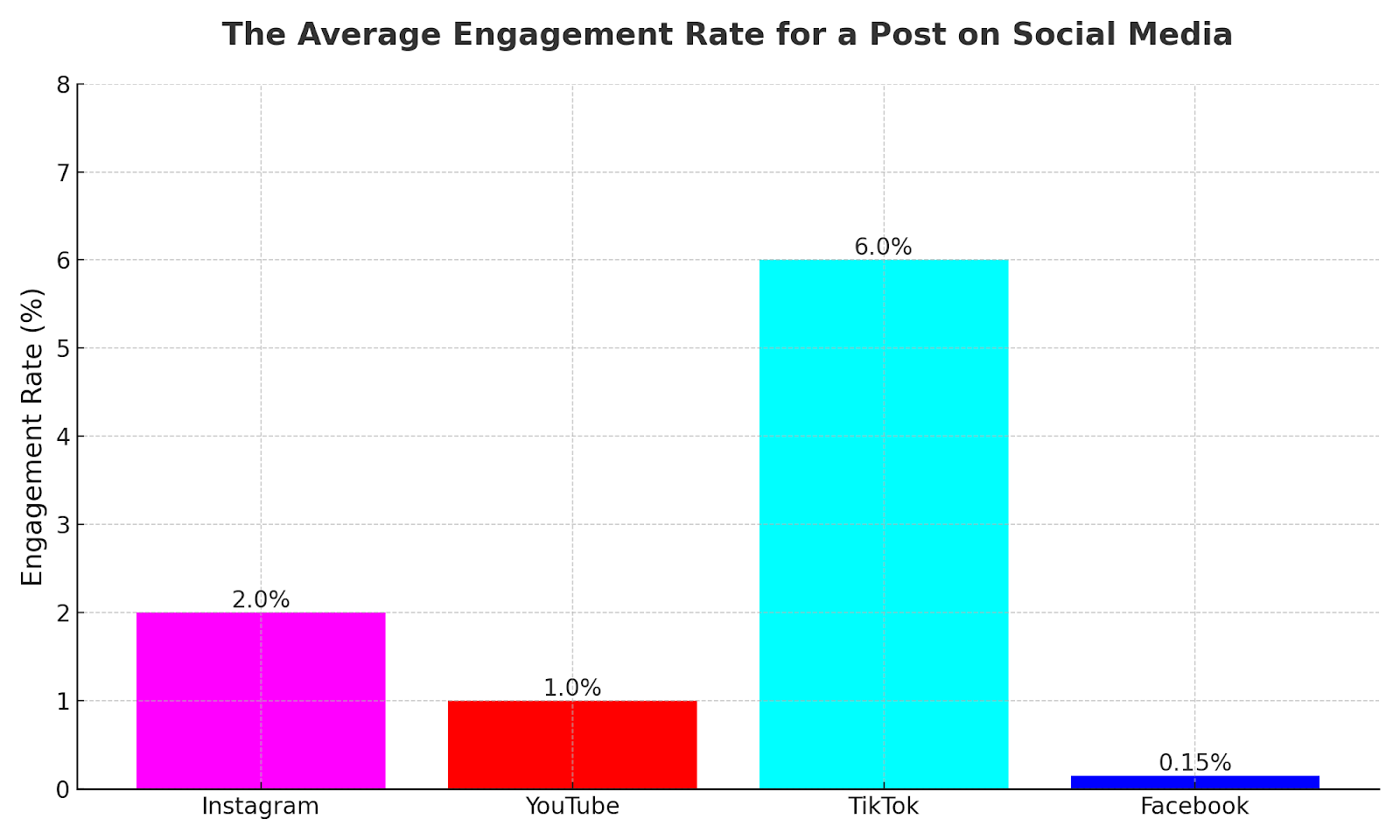
 The video marketing campaigns on social media that receive the most clicks and engagement come from Instagram. On average, videos on Instagram receive over 2 times as much engagement as other social media platforms produce.
 82% of Internet traffic next year will come from video. This says a lot about where content marketing’s headed and why it’s going to become more important to move to text communications to visual.
 Videos are shared on social media 1,200% more than images and text combined. Facebook, Instagram, Twitter, Snapchat, YouTube, and video marketing platforms are reaping big rewards as users come to consume and share video.
 Although the optimal length for a digital marketing video shared on general social media platforms is 30 seconds of less, multiple studies have found the recommended length for YouTube videos is 5-7 minutes. This is believed to be because YouTube is a platform much more focused on long-form video storytelling where a user expects to find longer content.
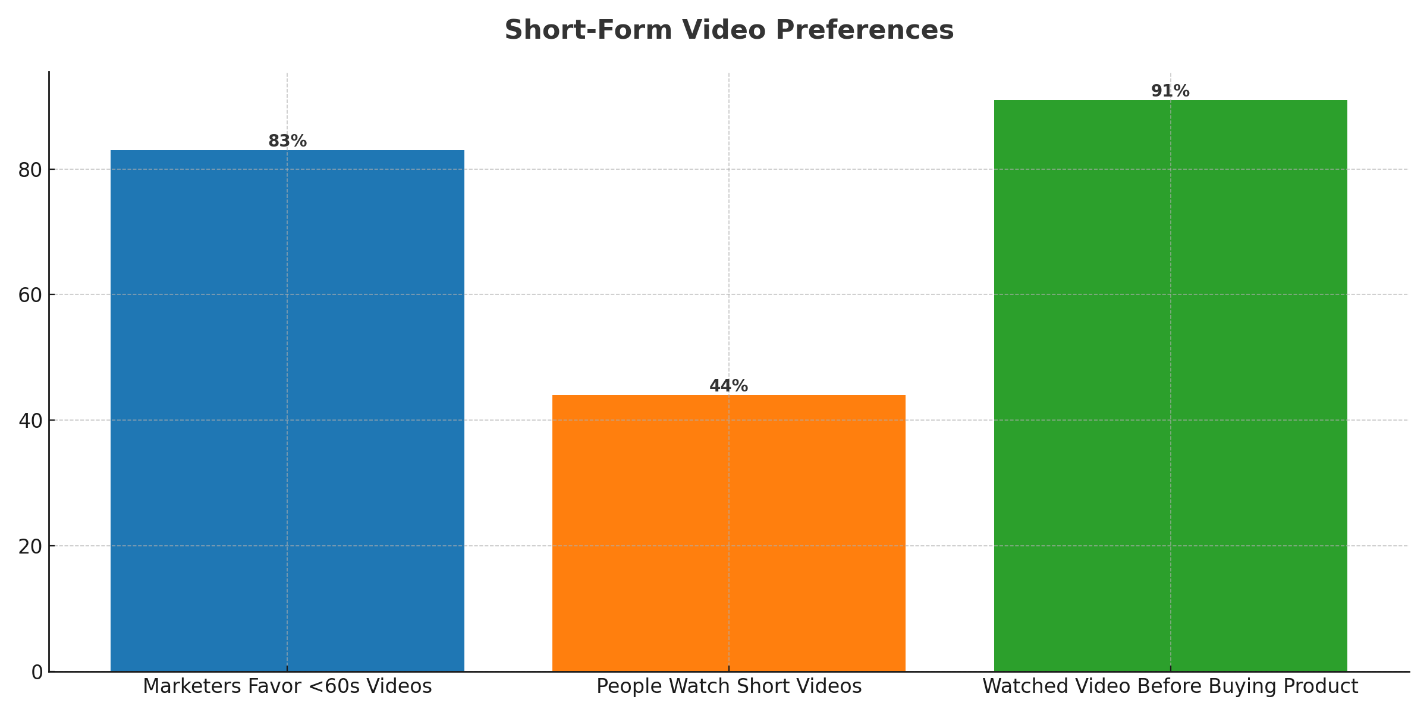
 The majority of videos are 60 seconds or shorter, showcasing the power of short-form video. Be direct, straightforward, and don’t waste time. Regardless of industry, this statistic is the same. If you need longer than a minute, you’re doing it wrong.
 90% of consumers say product video helps them make a decision on purchasing. If you’re overseeing an eCommerce video marketing campaign, it’s a smart move to make an informational, advantage-focused video centering on product by product.
 45% of users watch more than 1 hour of video on Facebook or YouTube weekly. This is expected to grow in size in the years to come. People are watching and searching for quality, entertaining, and informational video. If you give it to them, they will come.
 Only 9% of small businesses in Canada have a YouTube account. As the biggest video sharing platform in the world, there’s a big gap here and a market untapped for small businesses and brands looking to move in. Adopt an approach, create an account, and launch a campaign. You may be surprised by what comes of it!
 On average, 64% of consumers are more likely to buy a product after watching a video featuring it. As you’ll find, simply by producing videos sharing info and benefits of a given product, you’re increasingly the likelihood of sales and revenues.