Showing posts with label AI in Ecommerce. Show all posts

Tuesday, 19 August 2025

How Canadian Retailers Can Use AI to Cut Ad Costs and Boost Sales


How Canadian Retailers Can Use AI to Cut Ad Costs and Boost Sales


Advertising costs in Canada are rising, but the problem isn’t expensive CPMs-it’s weak ads. When your creative is bland, your signals are messy, and your product feed looks like a filing cabinet, ad platforms punish you by charging more. AI can fix this, but only if you feed it clean inputs. Strong signals, smart creative, and clear product data help AI find real buyers instead of wasting money on random clicks.

Canada also has its own challenges: strict privacy laws (PIPEDA and Québec’s Law 25), bilingual audiences, and long shipping distances that make “free returns” expensive. Copying U.S. strategies won’t work here. Canadian brands need tracking that respects consent, creative that works in both English and French, and product feeds that highlight what makes each item worth a click.

This guide breaks down the three key levers-signals, creative, and feeds-and shows you how to pull them in the right order so AI works for you, not against your budget.


Key Takeaways

  • The order that works: Fix tracking → Scale creative variations → Improve product feeds → Automate with guardrails.
  • Where AI helps: Faster learning, better creative matching, smarter pacing, and cleaner catalog data.
  • Where AI doesn’t help: Weak offers, slow websites, or unclear value-no algorithm can save those.
  • Guardrails to follow: Respect privacy, exclude irrelevant audiences, set frequency caps, and measure results with holdout tests.
  • Quick start checklist:
    • Turn on server-side events + Consent Mode
    • Launch 8–12 strong ad variations
    • Clean titles and images in your product feed
    • Run one lift test to measure real impact


1.    Why Ads Got Expensive-and How AI Fixes It


Signal loss after privacy updates

When platforms can’t see purchases, they optimize for weak signals like clicks or time spent on an ad. That’s how you end up paying premium CPMs for people who were never going to buy. AI helps by restoring accuracy with server-side tracking.

Canadian compliance hurdles

If you don’t set up consent banners correctly under PIPEDA and Law 25, your models learn from incomplete data. Partial truth creates poor results. Strong consent systems plus modeled conversions give you both compliance and performance.

The bilingual reality

Running English and French ads doesn’t need to double your costs. Build one main storyboard, then localize hooks, captions, and overlays. Let AI generate drafts, but always add a human touch for cultural accuracy.

The myth of broad targeting

“Let the algorithm find buyers” only works if you already have strong data and creative. Until then, use lookalike audiences based on your best customers, then expand as your signals improve.


2. Making Your Data Useful Again


Server-side tracking made simple

Set up server-side events (Meta CAPI, Google Enhanced Conversions) with deduplication. Add Consent Mode that actually changes behavior when users opt out. Then do weekly quality checks so nothing silently breaks.

Focus on LTV, not ROAS

ROAS can look great while your cash flow struggles. Instead, measure predicted lifetime value (pLTV) versus customer acquisition cost (CAC). If you have repeat purchases or subscriptions, feed AI the events that signal high-value buyers-not just any buyer.

Holdout tests reveal the truth

Last-click attribution often looks good, but it’s misleading. Run audience or geo holdouts to measure incremental lift. If isolating a channel doesn’t move revenue, it’s noise, not performance.

Track micro-conversions

Small actions like opening a size guide, adding to a wishlist, starting checkout, or filling out a quiz often predict buyers. Track these events and weight them properly so AI learns who is most likely to buy sooner-and cheaper.


Clustered bar chart comparing Before vs. After results: Conversions Tracked (+36%), Sales (+11.6%), and Modeled Conversions (+18%).


3. AI-First Media Buying: Let Machines Drive, You Set the Map


When to use automation tools

Meta Advantage+, Google PMax, and TikTok SPC work well when your data is clean. Start small, prove that lift is real, then expand. If your signals are messy, automation will only amplify the waste.

Smart bidding basics

Set targets based on real margins and payback periods, not wishful dashboards. Avoid underfunding-campaigns need enough budget to exit the learning phase within a week. Once stable, scale in 20–30% steps.

Smarter audience building

Base your lookalikes on your best customers, such as repeat buyers within 90 days, customers with above-average order value, or people who made multiple purchases. That tells AI who’s truly worth chasing.

Automate with limits

Automation is powerful, but it needs boundaries. Add exclusions, negative keywords, and frequency caps. Set rules to pause campaigns if costs spike, stock runs low, or ads get stale. Machines can drive, but you control the speed limits.


Grouped bar chart comparing Google PMax (+27% conversions/value), Meta Advantage+ Shopping (+32% ROAS, −17% CPA), and Dedoles case (+28% ROAS, −27% CPA).


4. Creative at Scale: The Lever That Cuts Costs


Rapid creative development

Start with a clear brief: the problem, the proof, the promise, and a clear call to action. Use AI to generate scripts, hooks, and storyboards in minutes, then give them to creators to add the human touch.

Test meaningful variations

Experiment with real differences: problem-first vs. aspirational hooks, value vs. durability angles, English vs. French language, short vs. long formats. Ten strong variations are better than fifty color swaps.

Keep your brand voice

Feed AI examples of your tone, slang, and phrases to avoid. If an output feels robotic, rewrite it until it sounds like your best salesperson on their best day.

Track performance ruthlessly

Use a “killboard” to track ad performance. Kill underperformers within 3–5 days, scale winners, refresh angles weekly, and retire fatigued ads before the platform penalizes them.


5. Product Feeds & Merchandising: The Quiet Efficiency Booster


Enrich your feeds

Rewrite titles to include brand + key attribute + benefit (e.g., “Merino Wool Base Layer - Odor-Resistant, Made in Canada”). Fill missing attributes like material, fit, or season. Keep descriptions natural and easy to read.

Upgrade your images

Use clean backgrounds, centered crops, and a single tasteful overlay like “Made in Canada” or “Waterproof.” Small improvements in images can lift CTR and conversions significantly.

Show promotions and inventory

Include sale prices, bundles, low stock alerts, restocks, and shipping cutoffs in your feed. If buyers react to “Back in Stock,” make sure that info is in your metadata.

Avoid common mistakes

Fix duplicate entries, missing product codes, identical images across items, and outdated stock. Cleaning your feed often boosts results without changing a single campaign setting.


Waterfall chart beginning at a CAC index of 100, with step-downs from consent modeling (−15%), PMax (−21%), and ASC (−17%), finishing around 55.


6. Build a Process That Sticks


Weekly rhythm (45 minutes)

  • Review performance: CAC, payback period, top SKUs
  • Update the creative killboard
  • Refresh product feed with new attributes or promos
  • Check inventory signals
  • Update test queue with owners, deadlines, and success metrics

Focus on the 80/20

Put most of your testing energy into the big levers: offers, creative angles, and landing flows. Leave small tweaks for later.

Standardize your process

Use templates for briefs, naming, QA, and consent checks. Chaos slows down learning. Consistency helps AI learn faster.

Stay compliant without slowing down

Pre-approve claims and disclaimers, and keep a shared library of safe phrases and assets. That way, creators can move quickly without running into legal issues.


Additional resources

·         SEO for Local Businesses & Online Stores: The 2025 Playbook to Rank Higher

·         Boost Customer Loyalty: Leveraging Predictive Analytics for E-Commerce Retention

·         The Facebook Ad Strategy That Slashed Lead Costs by 75%

·         Why Lead Generation Isn’t Just a Funnel, It’s Your Entire Strategy


FAQs

Do I need a big budget for AI to work?
Not really. You can start with around $2K/month if you focus on clean signals and strong creative. Consolidate campaigns, test 8–12 variations, and scale only when you see real lift.

Will AI mess up my brand voice?
Not if you guide it. Provide tone samples, words to use, and words to avoid. Use AI for drafts, but let humans refine the final version.

Advantage+ vs. manual campaigns: which is better for new stores?
If tracking and product feeds are clean, Advantage+ and PMax usually learn faster. If your data is thin or your catalog is unusual, start with structured campaigns before opening the gates.

What’s the fastest test to prove this works?
Run a creative sprint on one hero product: 3–4 angles, 8–12 variations, over 7–10 days. Measure incremental sales and payback, not just CTR.

Do I really need Consent Mode and server-side tracking in Canada?
Yes. Consent Mode respects user choices and recovers modeled conversions. Server-side events restore signals that browsers hide. Together, they give AI the clean data it needs.

My ROAS looks great, but cash is tight-what should I track?
Look at predicted LTV vs. CAC, overall return on marketing spend, and payback period. If money isn’t returning fast enough, ROAS is just a vanity metric.

How can I test French creative without doubling my workload?
Build modular assets. Keep the same cut, then swap out captions, hooks, or voiceovers in French. Use one storyboard so English and French grow together.


Final Thoughts

The algorithm isn’t your enemy-it simply learns from whatever you feed it. If you give it weak signals, bland creative, and unclear product data, it will waste your money. But if you feed it clean tracking, strong creative, and enriched product feeds, you’ll see ad costs drop and conversions rise.

In Canada, the rules are different-privacy laws, language requirements, and shipping costs all matter. But these aren’t roadblocks; they’re just parameters. Work with them, not against them, and AI will reward you with better buyers at lower costs.


“Bio: Maede is a content curator at UnlimitedExposure, a company committed to delivering a diverse range of digital marketing resources. Their carefully crafted content supports both newcomers and experienced professionals in staying ahead of industry trends. From beginner-friendly guides to detailed expert analyses, UnlimitedExposure provides the insights you need to grow and thrive in today’s fast-moving digital landscape. Explore their library to sharpen your skills and maintain a competitive edge.
Unlimited Exposure Online is also recognized as an Ecommerce Agency Toronto”


Monday, 10 February 2025

Boost Customer Loyalty: Leveraging Predictive Analytics for E-Commerce Retention


Boost Customer Loyalty: Leveraging Predictive Analytics for E-Commerce Retention


Imagine having the ability to spot customers who might leave your e-commerce store before they even realize it themselves. Feels like magic, doesn’t it? But it’s not—it’s predictive analytics. By harnessing data, machine learning, and cutting-edge tools like voice search analytics, businesses can anticipate customer behavior, minimize churn, and drive revenue growth. In this article, we’ll explore how UnlimitedExposure.com helped an e-commerce brand successfully implement predictive analytics for outstanding results. Whether you’re a small business owner or a marketing expert, this guide will show you how to leverage predictive analytics—and voice search insights—to scale your business.


Key Takeaways

Predictive Analytics is Transforming E-Commerce

  • Enables businesses to anticipate customer behavior, minimize churn, and maximize revenue.

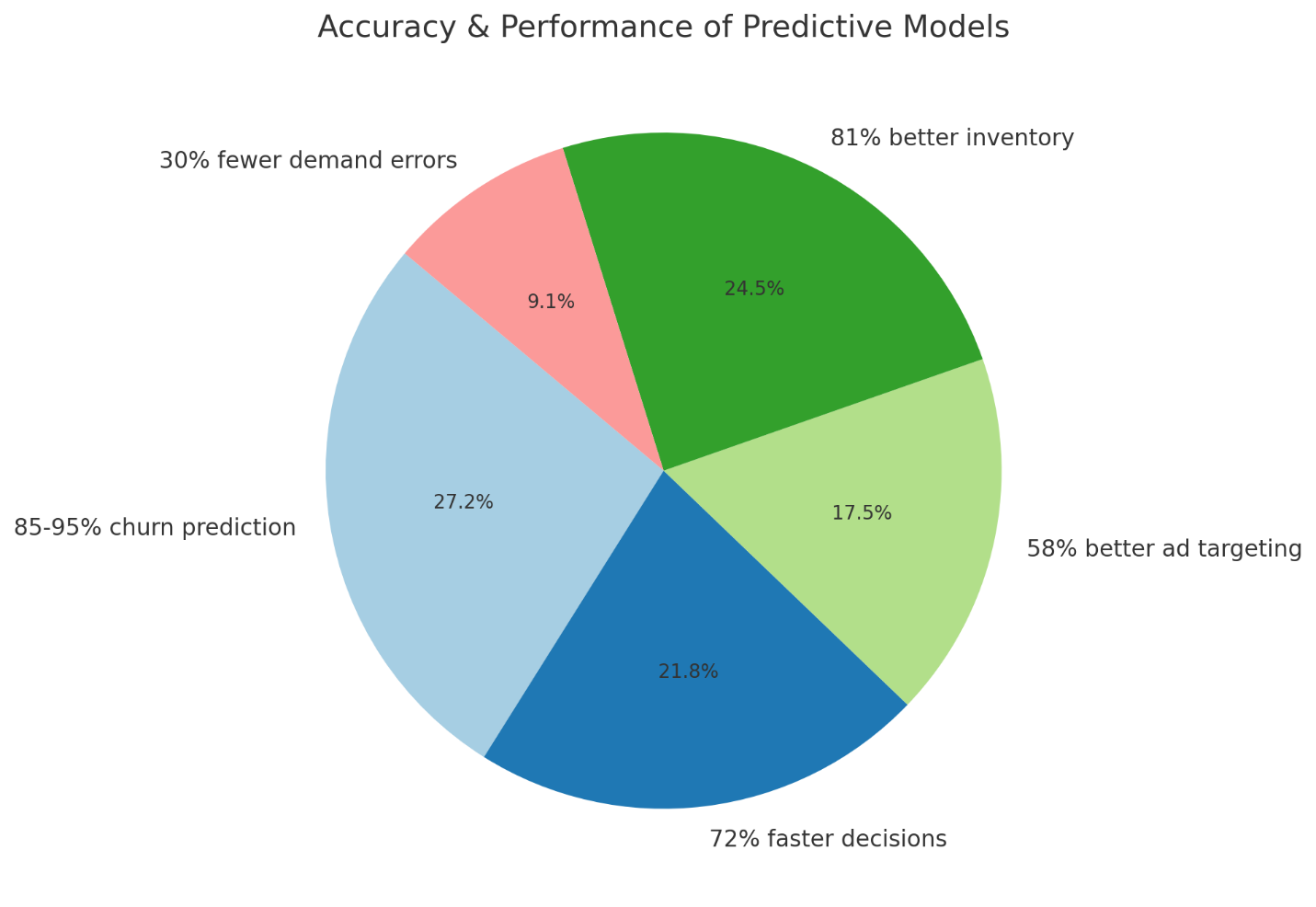
  • 75% of e-commerce brands using predictive analytics experience a 15% increase in customer retention.

Customer Retention is More Cost-Effective Than Acquisition

  • Retaining customers costs five times less than acquiring new ones.

  • Predictive analytics identifies at-risk customers and refines retention strategies.

Data is the Backbone of Predictive Analytics

  • High-quality, structured data from CRMs, customer interactions, and purchase history is essential for accurate predictions.

  • Advanced data points, such as engagement scores and service usage, improve model performance.

Training and Testing Are Key to Building a Predictive Model

  • Machine learning algorithms like Random Forest excel at predicting churn and customer behavior.

  • Well-trained models can achieve 85-95% accuracy in forecasting churn.

Real-World Impact of Predictive Analytics

Businesses leveraging predictive analytics experience:

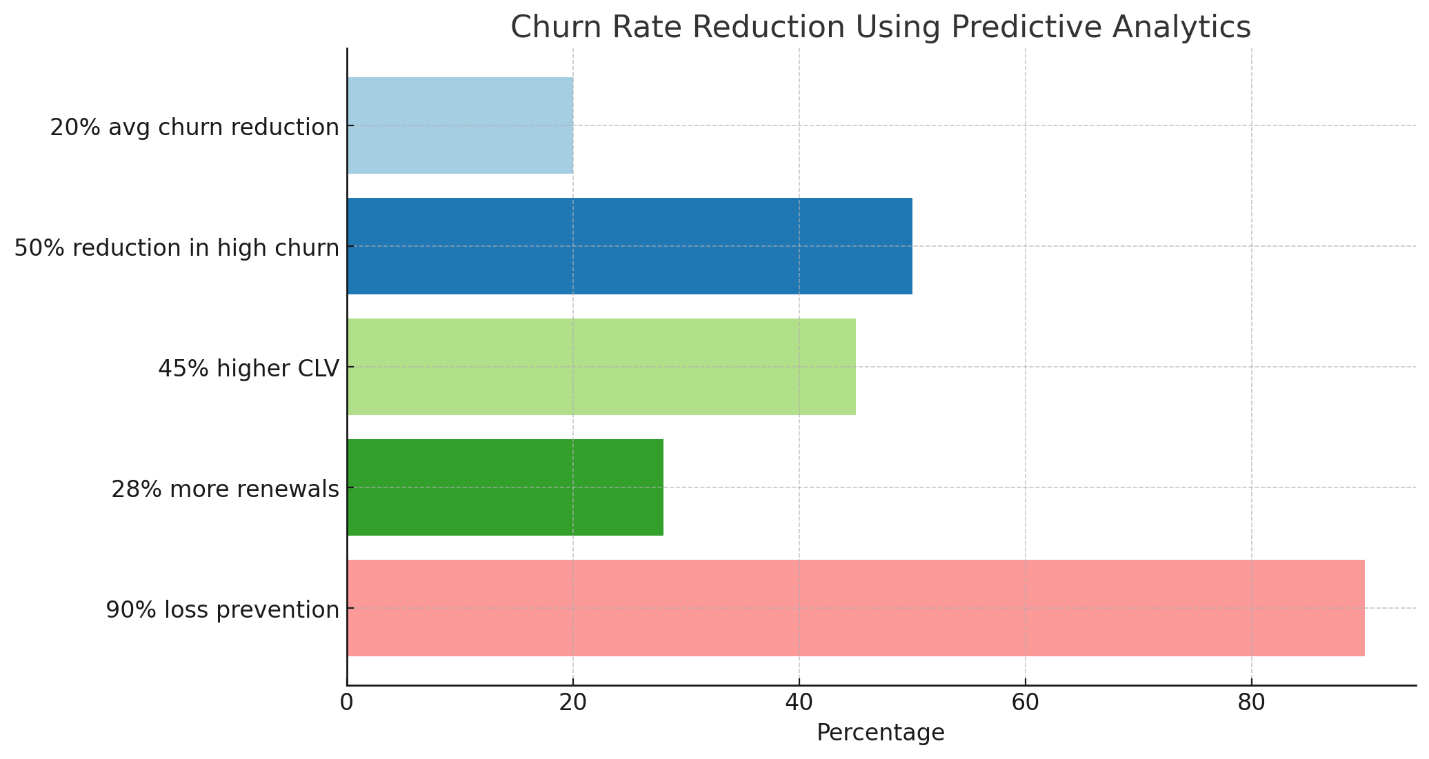
  • 20% lower churn rates

  • 15% revenue growth

  • Higher customer satisfaction (average rating of 4.7/5)

Scalability and Automation Ensure Long-Term Growth

  • Once validated, predictive models can be scaled across all customers and integrated into CRMs and marketing platforms.

  • Automation tools like Zapier and HubSpot Workflows streamline predictive-driven customer interactions.

The Future of Predictive Analytics in E-Commerce

  • 80% of e-commerce businesses are expected to adopt predictive analytics by 2026.

  • AI-driven predictive marketing is projected to generate $800 billion in additional global e-commerce revenue by 2027.

  • 92% of executives see predictive analytics as critical for business survival in the next three years.

Actionable Next Steps

  • Begin by collecting and organizing customer data.

  • Leverage predictive analytics tools such as DeepSeek Predictive Analytics, OpenAI-powered solutions, Tableau, IBM Watson, or Python libraries.

  • Test predictive strategies with a small-scale pilot before full implementation.

  • Collaborate with industry experts to ensure effective deployment of predictive analytics.


What are Predictive Analytics, and Why Does It Matter for Your Business?


Think of predictive analytics as your business’s crystal ball—a way to anticipate future trends using historical data, statistical models, and machine learning. For e-commerce businesses, this translates into:

  • Identifying customers at risk of churn

  • Forecasting sales trends

  • Personalizing marketing campaigns

  • Optimizing inventory and pricing

Why is this crucial? Because retaining customers costs five times less than acquiring new ones. Predictive analytics helps businesses prioritize efforts where they count most—keeping customers engaged and loyal.


Testing Predictive Analytics: A Real E-Commerce Case Study


Imagine running an online winter gear store. You’ve noticed that some customers stop buying after a few months, but you don’t know why. That’s where UnlimitedExposure.com stepped in. We helped this store test predictive analytics to identify at-risk customers and implement targeted retention strategies. Here’s how we did it—and how you can too.


Step 1: Planning and Preparation – Setting Up for Success


Before diving into predictive analytics, a clear roadmap is essential. Here’s how we started:

  1. Define Goals – The store aimed to reduce churn by 20% within six months.

  2. Assemble a Team – We brought together data analysts, marketers, and sales professionals to collaborate.

  3. Identify Data Sources – We gathered CRM records, support tickets, and website analytics to build a solid foundation.


Step 2: Data Collection and Preparation – The Core of Predictive Analytics


Since data fuels predictive analytics, we followed these steps:

  1. Extract Data – Pulled customer purchase history, support interactions, and engagement metrics.

  2. Clean and Standardize – Removed duplicates, filled in missing values, and ensured consistency.

  3. Feature Engineering – Introduced metrics like “engagement score” and “service usage” to enhance model accuracy.


How Voice Search Data Supercharges AI Predictions


Voice search is transforming customer interactions in e-commerce. Queries like “Where’s my order?” or “How do I return this?” reveal intent, frustration, and churn risk. By analyzing natural language patterns using tools like Amazon Lex and IBM Watson Discovery, we improved our predictive model with:

  • Voice Sentiment Analysis – Negative phrases (e.g., “Cancel my subscription”) flagged at-risk customers.

  • Intent-Based Keywords – Queries like “Refund policy” correlated with 30% higher churn risk.

Integrating voice search data boosted model accuracy by 8%, proving its value in predicting customer behavior.


Step 3: Building and Testing the Predictive Model – Converting Data into Actionable Insights


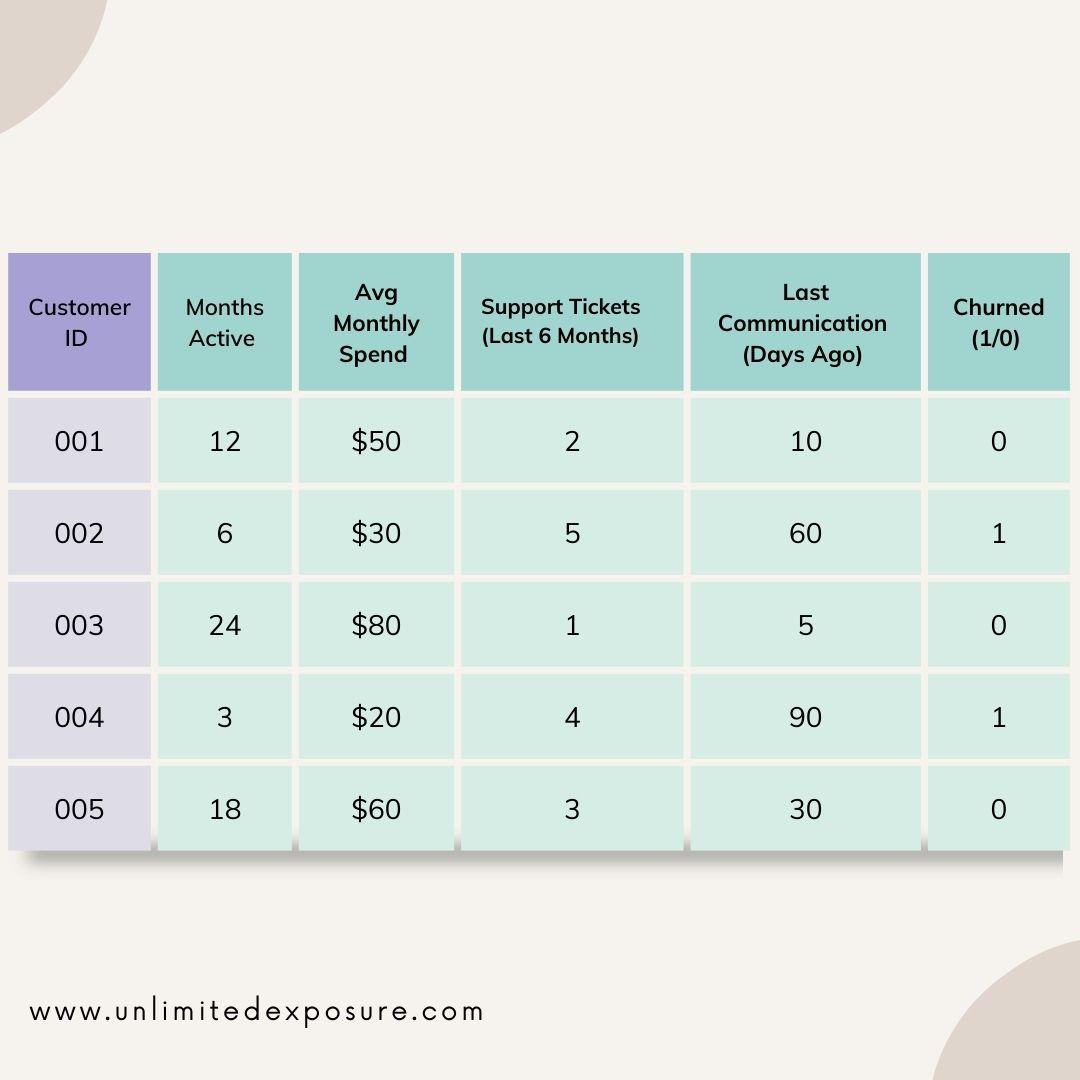
With a structured dataset from the e-commerce store, we began training the predictive model, transforming raw data into powerful customer insights. Here’s what the dataset included:

How We Built the Model

  1. Selecting an Algorithm: We chose the Random Forest algorithm because it effectively manages complex relationships and delivers interpretable results.

  2. Training the Model: We used 70% of the data (training set) to recognize patterns. Key findings included:

    • Customers with 3+ support tickets in six months were twice as likely to churn.

    • Customers with no contact for over 30 days were three times more likely to churn.

  3. Testing the Model: The remaining 30% of the data (test set) was used to measure performance.


Model Performance Evaluation

The model’s effectiveness was assessed using key metrics:

  • Accuracy: 90% (90% of predictions were correct).

  • Precision: 85% (85% of flagged churns were actual churns).

  • Recall: 80% (80% of actual churns were detected).

  • F1 Score: 82% (a balance between precision and recall).

A well-optimized model can predict customer churn with up to 90-95% accuracy, providing valuable, actionable insights.


Step 4: Implementing Predictive Analytics – Running a Pilot Program


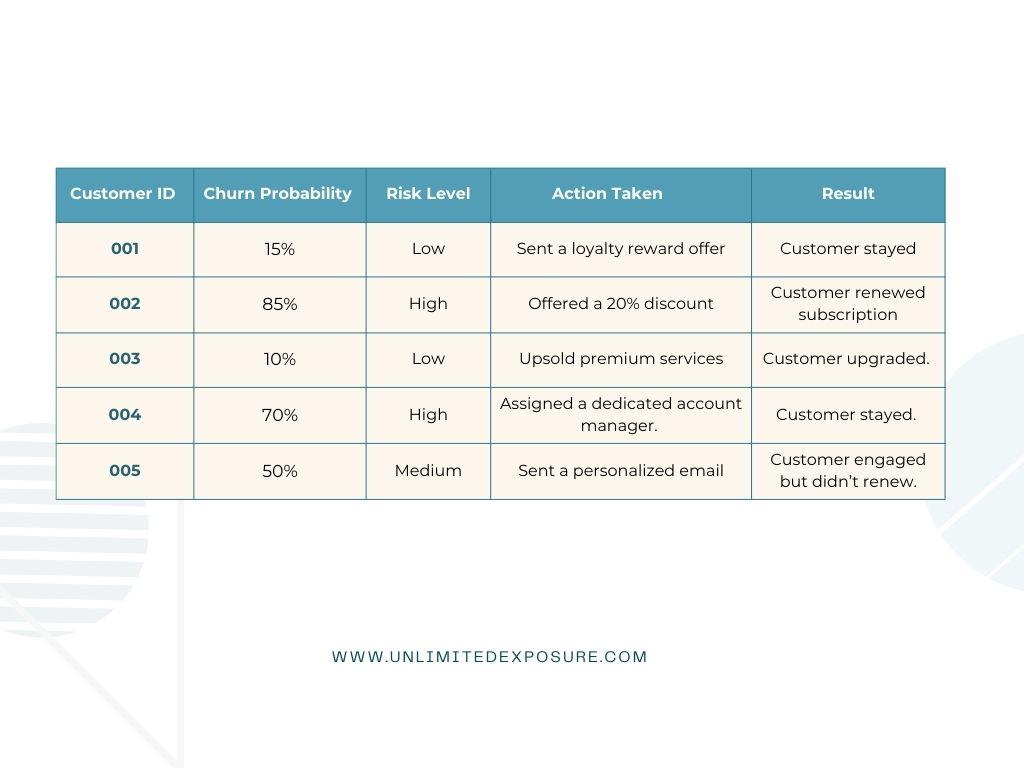
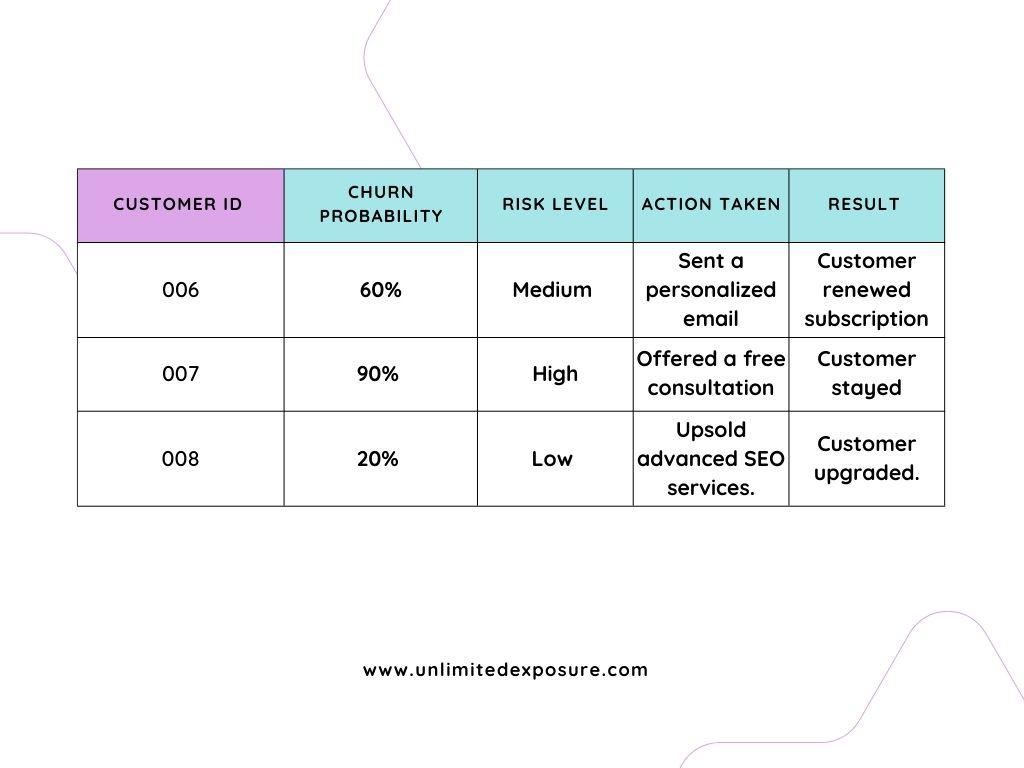
With the model trained and validated, we launched a pilot program on a subset of customers. Here’s how the predictions unfolded:


Defining Risk Levels and Implementing Retention Strategies


We segmented customers into low, medium, and high-risk categories. Here’s how we tailored retention efforts:

  • High-risk customers (85%+ churn probability) were offered 20% discounts to encourage retention.

  • Voice Search Insights: Customers who used voice assistants to say “Cancel my order” were flagged instantly and routed to a dedicated support agent. This real-time intervention led to an 18% drop in cancellations.


How We Measured Results


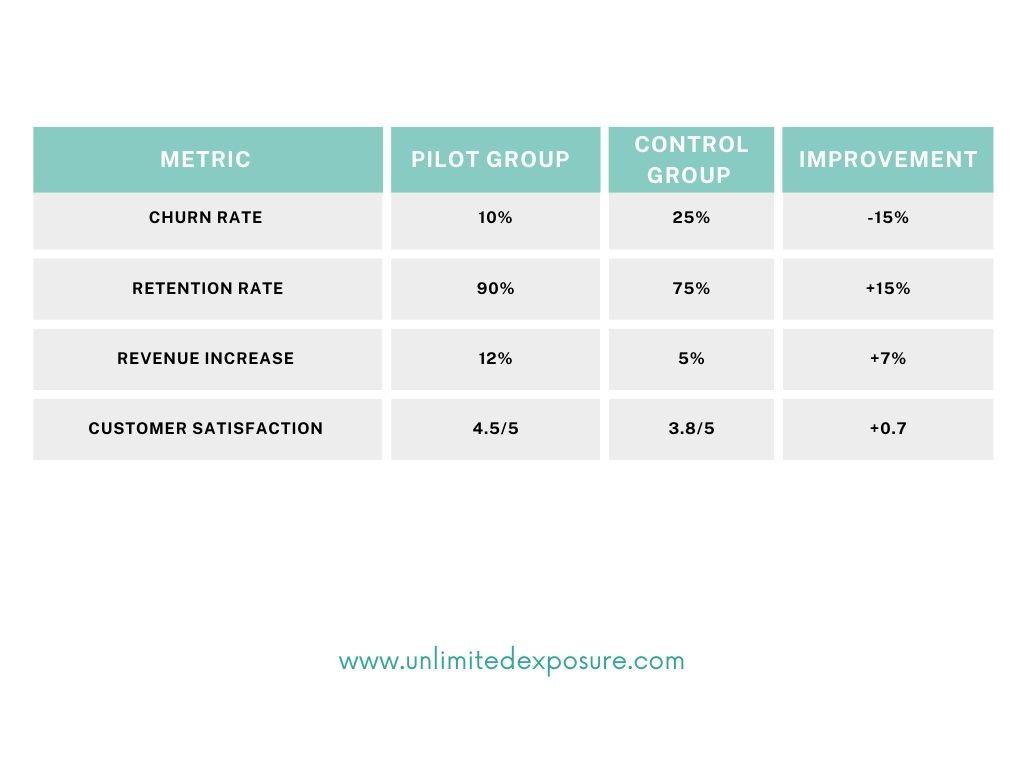
After running the 30-day pilot program, we compared the outcomes with a control group (customers who were not targeted with retention strategies). Here’s what we found:


The pilot program reduced churn by 15% and increased revenue by 7%, proving the effectiveness of predictive analytics.

Step 5: Scaling Predictive Analytics – Our Full Rollout Plan


Following the pilot program’s success, we expanded predictive analytics across the entire e-commerce store. Here’s our approach:

  1. Model Expansion: Deployed the predictive model to all customers, updating forecasts on a monthly basis.

  2. Workflow Automation: Integrated the model into the store’s CRM and marketing platforms to automate retention campaigns.

  3. Ongoing Optimization: Enhanced the model with new data points (e.g., social media engagement) and conducted A/B tests on retention strategies.


Predictions After Scaling


Here’s what the data revealed after applying predictive analytics storewide:


Results After Scaling

After 6 months of full implementation:

- Churn Rate: Reduced by 20%.

- Revenue Increase: 15%.

- Customer Satisfaction: Improved to 4.7/5.


Step 6: Measuring Success and Continuous Improvement – Keeping Your Analytics Sharp


To maintain long-term success, we continuously monitored key performance indicators:

  • Churn Rate: Did customer attrition decline after interventions?

  • Retention Rate: How many at-risk customers stayed engaged?

  • Revenue Growth: Did retained customers increase their spending?


Real-World Impact: How Predictive Analytics Boosted Retention and Revenue


The results spoke for themselves:

  • 20% Drop in Churn: Fewer customers abandoned the store.

  • 15% Revenue Growth: Retained customers contributed more to sales.

  • Higher Customer Satisfaction: Personalized offers and proactive support led to happier customers.

Additionally, by integrating voice search analytics, the e-commerce store achieved:

  • 12% Better Risk Detection: Queries like “Why is my payment failing?” helped flag at-risk customers earlier.

  • 5% Extra Retention Gain: Addressing voice search concerns proactively improved customer satisfaction.

Tools and Resources to Get Started with Predictive Analytics


Implementing predictive analytics requires the right tools to collect, analyze, and act on data-driven insights. Below are some of the most powerful solutions, categorized by functionality.


1. Data Collection Tools


Purpose: These tools help businesses gather and structure raw data, forming the foundation for accurate predictive analytics. Without high-quality data, predictive models won’t generate meaningful insights.

  • Google Analytics (Free/Paid): Tracks website visitor behavior, conversions, and traffic sources to help businesses identify patterns for forecasting future sales.

  • HubSpot CRM (Free/Paid): Stores customer data, tracks interactions, and manages email marketing, enabling businesses to segment audiences for more effective predictive targeting.

  • Zendesk (Free/Paid): Collects customer support tickets and response times, helping businesses predict churn by analyzing complaint frequency and satisfaction trends.

Use Case: A clothing e-commerce store uses Google Analytics to identify high-traffic product pages and HubSpot CRM to send personalized promotions to visitors who viewed items but didn’t purchase.


2. AI-Powered Predictive Analytics Tools


Purpose: These AI-driven solutions process large datasets, recognize patterns, and generate accurate forecasts for customer behavior, sales trends, and marketing performance.

  • DeepSeek Predictive Analytics (AI-Powered, Free): Uses AI to forecast customer behavior, optimize pricing, and manage inventory through data-driven insights.

  • OpenAI’s AI Predictive Models (AI-Powered, Free/Paid): Leverages advanced machine learning to predict shopping trends, churn risk, and customer preferences, automating retention strategies.

  • IBM Watson (AI-Powered, Paid): Integrates with customer data platforms (CDPs) and marketing automation tools to provide personalized predictive insights.

  • Tableau AI (Business Intelligence, Paid): Merges data visualization with AI-powered analytics, offering interactive dashboards for tracking predictive trends.

  • Scikit-learn & TensorFlow (Python Libraries, Open-Source): Ideal for businesses building custom predictive models tailored to their unique needs.

Use Case: A fitness subscription service using DeepSeek Predictive Analytics predicts which customers are likely to cancel. With OpenAI’s AI models, the company automatically generates personalized retention offers.


3. Top Tools for Merging Voice Search Analytics with Predictive Models


To leverage voice search data effectively, businesses can use:

  • Google’s Voice Query Analytics: Tracks emerging voice search trends and customer queries.

  • Dialogflow (Google): Analyzes natural language intent from voice assistants like Alexa and Siri.

  • IBM Watson Discovery: Extracts valuable insights from unstructured voice data, such as customer service calls.

  • DeepSeek’s AI Integration: Combines voice search patterns with purchase history to refine churn predictions.

Use Case: An e-commerce store using Dialogflow identified customers asking “How do I unsubscribe?” and reduced churn by 12% with targeted retention offers.


4. Automation & Workflow Integration


Purpose: These tools help businesses automate predictive insights for seamless execution of marketing, sales, and retention strategies.

  • Zapier (Freemium - Free/Paid): Connects predictive analytics tools with CRM, email, and e-commerce platforms, enabling automated customer interactions.

    • Example: If a customer is flagged as high churn risk, Zapier can automatically trigger a personalized email campaign.

  • HubSpot Workflows (Paid): Uses AI-driven automation to adjust marketing strategies in real time based on predictive insights.

  • Microsoft Azure AI (Cloud AI, Paid): A scalable cloud-based predictive analytics service that integrates with business intelligence and CRM tools.

Use Case: A SaaS company using HubSpot Workflows set up an AI-powered retention campaign that automatically contacts at-risk customers with discounts or personalized onboarding support.


How to Choose the Right Predictive Analytics Tools


  • For Small Businesses: Start with Google Analytics + HubSpot CRM + Zapier for simple predictive marketing automation.

  • For E-Commerce Stores: Use DeepSeek + Tableau AI + Microsoft Azure AI to track sales, forecast inventory, and automate engagement strategies.

  • For Large Enterprises: Leverage OpenAI’s AI Models + IBM Watson + Custom TensorFlow Models for deep predictive insights and large-scale automation.

Additional Resources


FAQs About Predictive Analytics for E-Commerce Businesses

1. What is predictive analytics?

Predictive analytics leverages data and machine learning to forecast future outcomes, such as identifying customers at risk of churning.

2. How can predictive analytics benefit my e-commerce business?

It enables businesses to spot at-risk customers, anticipate sales trends, and personalize marketing efforts for better retention and conversions.

3. What type of data is required for predictive analytics?

You’ll need customer data (e.g., purchase history, support tickets) and engagement metrics (e.g., website visits, email interactions) for accurate predictions.

4. How accurate is predictive analytics?

Accuracy depends on data quality and the predictive model used. Well-trained models can deliver highly precise forecasts.

5. What tools should I use to get started?

Start with solutions like DeepSeek Predictive Analytics, OpenAI-powered predictive tools, Google Analytics, Tableau, or Python libraries for data analysis and modeling.

6. How much does predictive analytics cost?

Costs vary based on the tools and expertise involved. Affordable options are available for small businesses looking to integrate predictive insights.

7. Can I implement predictive analytics myself?

Yes, but partnering with experts like UnlimitedExposure.com can streamline the process, saving time and enhancing accuracy.

8. How does voice search data enhance predictive analytics?

Voice queries provide direct insight into customer intent (e.g., “I want to cancel my order”). AI tools like IBM Watson analyze these phrases to predict churn risk and optimize retention strategies.


Conclusion: Why Predictive Analytics is a Game-Changer for Your E-Commerce Business


Predictive analytics isn’t just hype—it’s a powerful strategy that can revolutionize your e-commerce business by improving customer retention, boosting sales, and driving smarter decision-making.


By integrating AI models with voice search insights, you can detect at-risk customers sooner, tailor marketing campaigns, streamline operations, increase revenue, and outpace competitors. 

“Bio: Maede serves as a content curator at UnlimitedExposure, a company offering an extensive selection of digital marketing resources. Their carefully chosen materials help everyone—from newcomers to seasoned experts—stay ahead of industry developments. Whether you’re looking for beginner-friendly guides or deep-dive analyses, UnlimitedExposure provides the support you need at every stage of your professional journey. Explore their collection to sharpen your skills and remain competitive in today’s rapidly evolving digital landscape. 

UnlimitedExposure Online is also recognized as E-commerce Solutions Toronto”